Wardline Accord
How it works
1. Set up the case
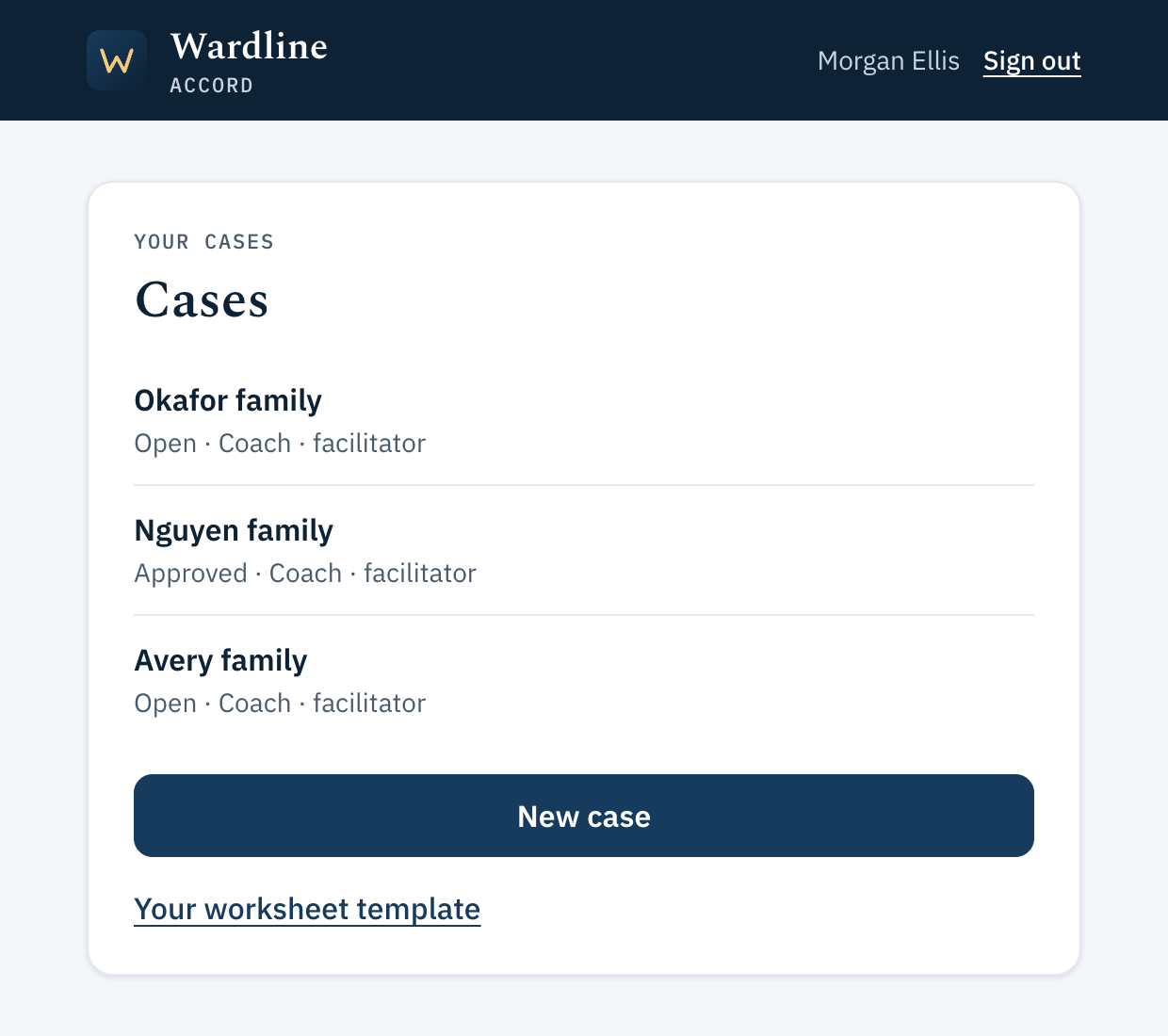
The professional running the process, such as a co-parenting coach, collaborative attorney or mediator, creates the case and invites the parties and the rest of the team. Each person has a role, so everyone sees what they should and nothing more.
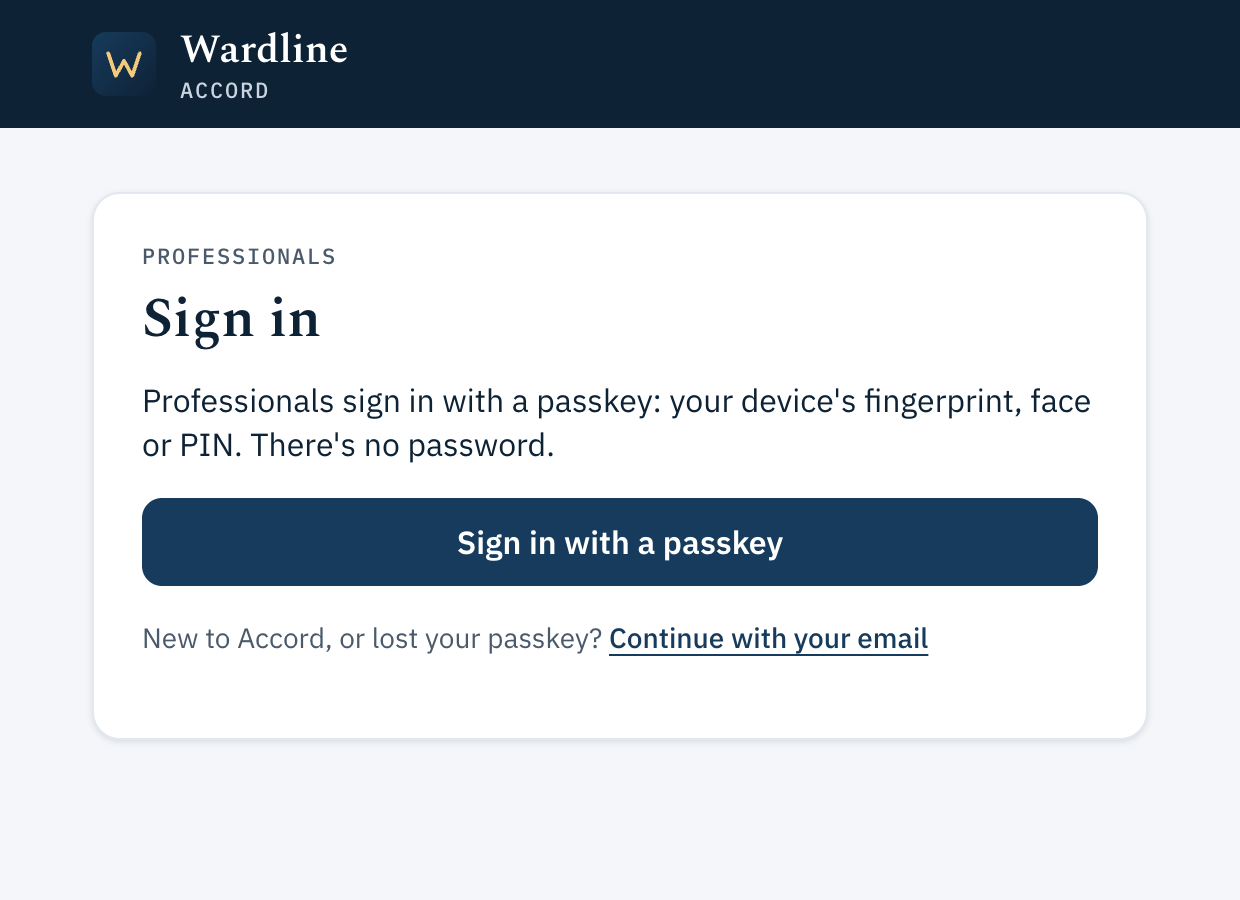
- Professionals sign in with a passkey: their device's fingerprint, face or PIN. There's no password.
- Parties don't need an account or a password. They join with a personal invite link and a one-time code sent to their email.
2. Work through it together
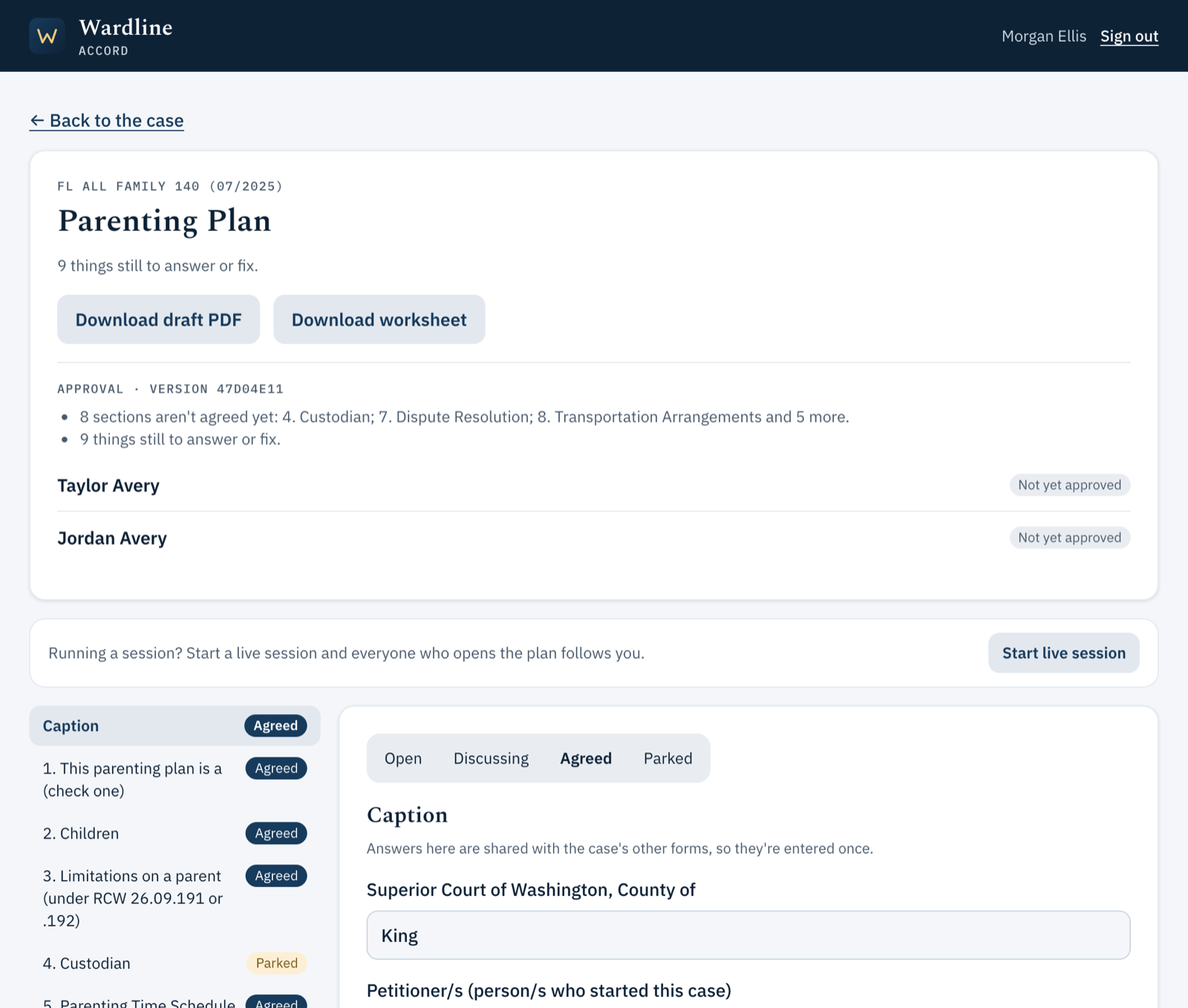
In a session, the facilitator drives: they put a section on screen and everyone sees the same thing, wherever they are.
- The form's own instructions, such as "check one" or "skip to section 7", become plain choices, and parts that don't apply are hidden.
- Every section has a status: open, discussing, agreed or parked.
- Topics for the attorneys go on a parked list, so they're not lost.
- The schedule builder fills in Attachment R: start from a suggested schedule, plan the holidays with Washington's dates and odd and even years, and check the calendar and overnight split.
3. Between sessions
Parties can read and comment in their own time. Before the next session, the facilitator sees what changed and who said what.
4. Checks as you go
Accord applies the form's own rules, so mistakes are caught before anyone signs:
- Exactly one box checked wherever the form says "check one"
- Required attachments are present
- Percentage splits add up to 100%
- Holidays in odd and even years mirror each other between the parents
- References to other documents hold together
5. Everyone approves
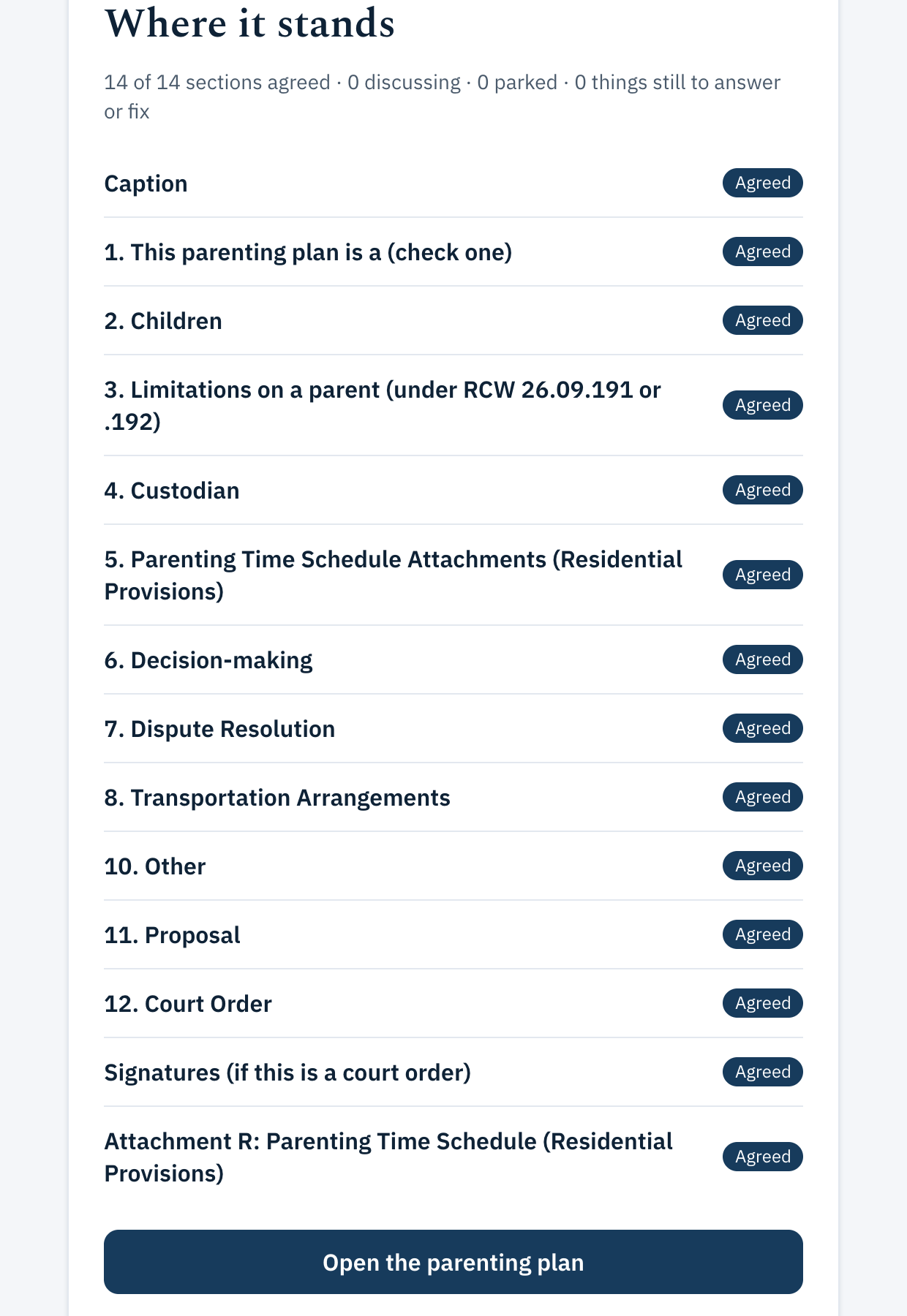
When the plan is ready, each party approves the final version. Each approval is tied to that exact text. If anything changes afterwards, the approvals are cleared and Accord shows who needs to review it again. The result is one version everyone agreed to, without rounds of email.
6. The court's own form
Accord adds the answers to the court's own published PDF. Nothing on the form is moved or retyped, so the output looks exactly as the court expects.
- Long answers continue on clearly labelled attachment pages, as the court's formatting rules allow.
- Each case records which revision of the form it used. When the court publishes a new revision, the case is guided across to it.
- The approved form is printed, signed and filed by the parties in the usual way.
See an example parenting plan and the matching coach worksheet, produced for a fictional family. They're visual examples and aren't tagged for screen readers.
Your records
Every case keeps a permanent record of who did what and which version everyone approved. That record holds only fingerprints of the documents, never their content. Any professional on a case can export their own client's material when the case closes, and deleting a case really removes it. See how Accord is protected.